What Is Kratom? A Complete Guide
A plain-English introduction to kratom: the plant, its origins and traditional use, what’s in the leaf, the product formats available today, and the rules every buyer should know.
By Sacred Plant Life Editorial TeamPublished
If you have seen kratom on store shelves or online and wondered what is kratom, you are not alone. Interest in this Southeast Asian botanical has grown quickly, and so has the amount of confusing and contradictory information about it. This guide gives you a clear, balanced overview so you can understand what kratom is before you decide whether to buy it.
We will cover the plant itself, where it comes from, how it has traditionally been used, the natural compounds found in the leaf, the product formats available today, how strains are named, and the legal and safety points that every adult consumer should know. Nothing here is medical advice — it is a consumer education resource.
Where Kratom Comes From
Kratom is the common name for Mitragyna speciosa, a tropical evergreen tree native to Southeast Asia. It grows naturally in the humid, rainforest regions of Indonesia, Malaysia, Thailand, Papua New Guinea and neighboring countries.
The Mitragyna speciosa Tree
Kratom belongs to the Rubiaceae family — the same botanical family as the coffee plant. Mature trees can grow more than 30 feet tall and produce large, glossy, dark-green leaves. It is the leaves, not the bark or flowers, that are harvested, dried and processed into the kratom products sold today.
Each leaf has a central vein and stem whose color (red, green or white) shifts as the leaf matures. That vein color later becomes part of how kratom “strains” are named, which we explain in detail in our kratom strains guide.
Traditional Use in Southeast Asia
Kratom has a long history of traditional use in rural Southeast Asia. Historically, farmers and laborers in Thailand and Malaysia chewed fresh leaves or brewed dried leaves into a tea, and kratom was also shared at social and ceremonial gatherings. Those customs have been passed down for generations and are the roots of the kratom products available in Western markets today.
What’s Inside a Kratom Leaf?
Kratom leaves naturally contain dozens of compounds called alkaloids. The most abundant is mitragynine, and a much smaller amount of a related alkaloid, 7-hydroxymitragynine (often shortened to 7-OH), is also present. The balance of these alkaloids varies with the tree’s growing region, the maturity of the leaf at harvest, and how the leaf is dried and stored.
Because alkaloid content can vary so much from batch to batch, reputable suppliers measure it with independent laboratory testing and also screen for heavy metals and microbial contaminants. If you want to know what a good lab report looks like, read our guide on how to verify kratom quality when buying online.
Common Kratom Product Formats
Modern kratom comes in several formats. None is inherently “better” — each suits different preferences for convenience, taste and measurement.
Kratom Powder
Powder is the most traditional and flexible format: dried leaves ground into a fine, green powder that is measured by weight. Popular single-strain examples include Green Maeng Da Kratom Powder and Red Bali Kratom Powder. If you choose powder, our guide on how to use kratom powder covers measuring and preparation.
Capsules and Tablets
Capsules and tablets contain pre-measured kratom powder, so there is no scale and no bitter taste. They are popular with people who value consistency and portability, such as Green Bali Kratom Capsules.
Extracts, Gummies and Teas
Newer formats include liquid extracts and shots, flavored gummies, and pre-portioned tea bags like Green Maeng Da Kratom Tea Bags. Extracts are more concentrated than plain leaf powder, so labels and serving sizes deserve extra attention. You can compare every format side by side on our full product catalog.
How Kratom Strains Are Named
Kratom “strains” are not separate plant species. They are naming conventions that combine a vein color (red, green or white) with a regional or trade name such as Maeng Da, Bali, Borneo, Thai or Malay. Vein color reflects leaf maturity and drying method, while the regional name traditionally points to where the leaf was grown or the style it is known for.
Strain descriptions vary between vendors, so treat them as a starting point rather than a guarantee. For a deeper breakdown of each color and name, see Kratom Strains Explained: Red, Green, White & More.
Is Kratom Legal?
In the United States, kratom leaf is not a federally controlled substance. However, the US FDA has not approved kratom as a dietary supplement or for any medical use, and federal and state regulators continue to review it. Several states, counties and cities have banned kratom, while others regulate it through consumer protection laws that set labeling, testing and age requirements.
Super Speciosa does not ship to states where kratom is banned — Alabama, Arkansas, Indiana, Louisiana, Rhode Island, Vermont and Wisconsin — or to banned cities, counties and countries. Laws change frequently, so always confirm the rules where you live before ordering.
What Responsible Consumers Should Know
Kratom is an adult product, and buying it responsibly starts with a few simple principles:
- You must be 21 years or older to purchase kratom.
- Buy only third-party lab-tested products made in a cGMP-compliant facility.
- Read labels carefully and follow the serving information provided.
- Talk to a qualified healthcare professional if you have health conditions, take medications, or are pregnant or nursing.
- Store kratom securely, away from children and pets.
- Check and follow your local, county, state and federal regulations.
Ready to shop lab-tested kratom?
Explore premium, third-party tested kratom through Super Speciosa, our trusted supplier. Must be 21 years or older to purchase.
Explore lab-tested kratom at Super SpeciosaFrequently Asked Questions
What is kratom made from?
Kratom is made from the dried leaves of Mitragyna speciosa, a tropical evergreen tree in the coffee family that is native to Southeast Asia. The leaves are ground into powder or processed into capsules, tablets, extracts, gummies and teas.
Is kratom approved by the FDA?
No. The US FDA has not approved kratom as a dietary supplement or for any medical use. Statements about kratom on this site have not been evaluated by the FDA and are not medical advice.
How old do you have to be to buy kratom?
You must be 21 years or older to purchase kratom from Super Speciosa. Some state and local laws also set their own age requirements.
What is the best kratom format for beginners?
There is no single best format. Capsules and tablets are pre-measured and taste-free, while powder offers the most flexibility. Many beginners start with a lab-tested single strain or a sampler bundle so they can compare options.
So, what is kratom? It is a traditional Southeast Asian botanical whose leaves are now sold in a variety of modern formats. Understanding its origins, how strains are named, and the legal and quality basics puts you in a strong position to shop responsibly.
When you are ready to compare products, read how to choose quality kratom products and then browse the Sacred Plant Life product catalog — every featured product is third-party lab-tested and available through Super Speciosa.
Products Mentioned in This Guide
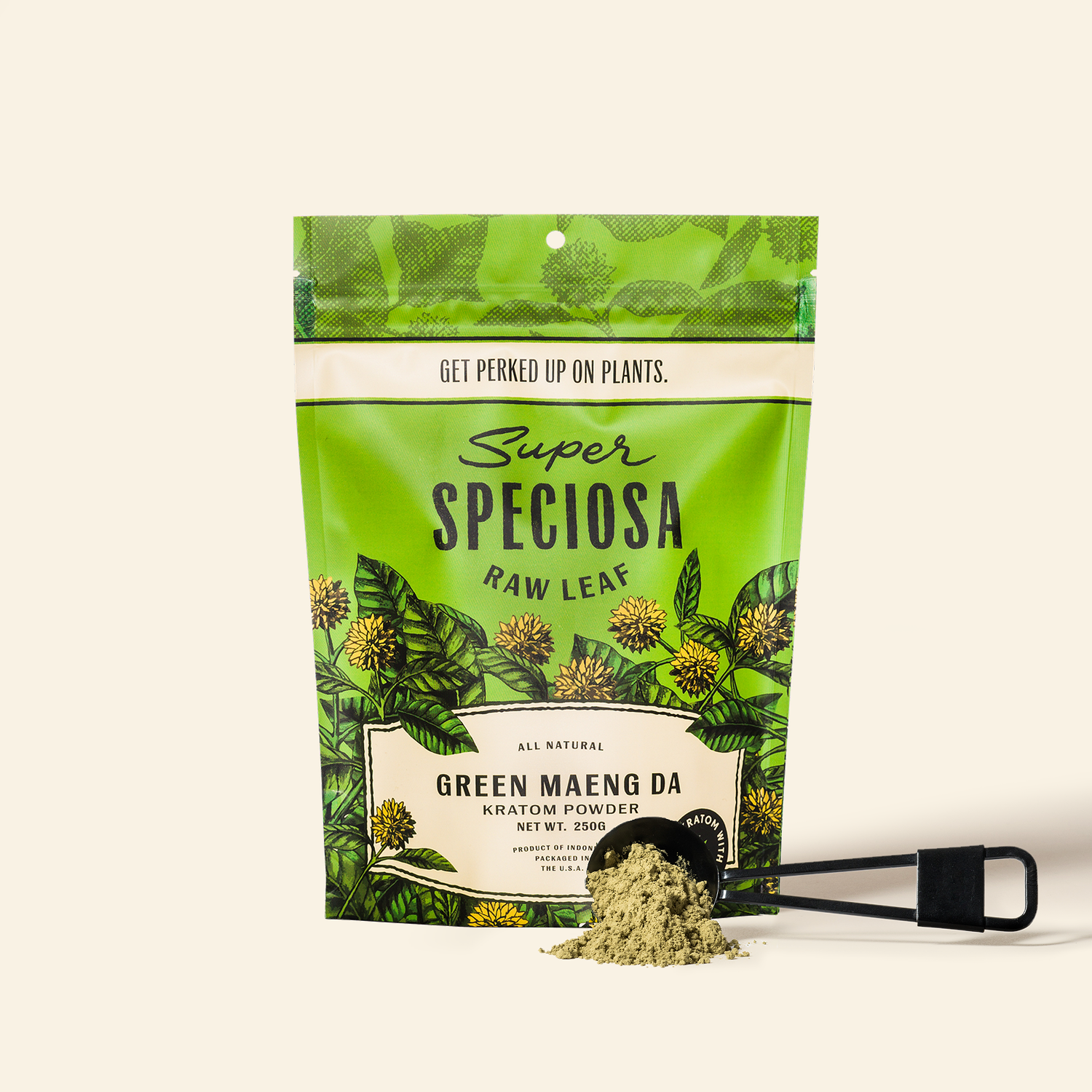
Green Maeng Da Kratom Powder

Green Bali Kratom Capsules

Green Maeng Da Kratom Tea Bags
